

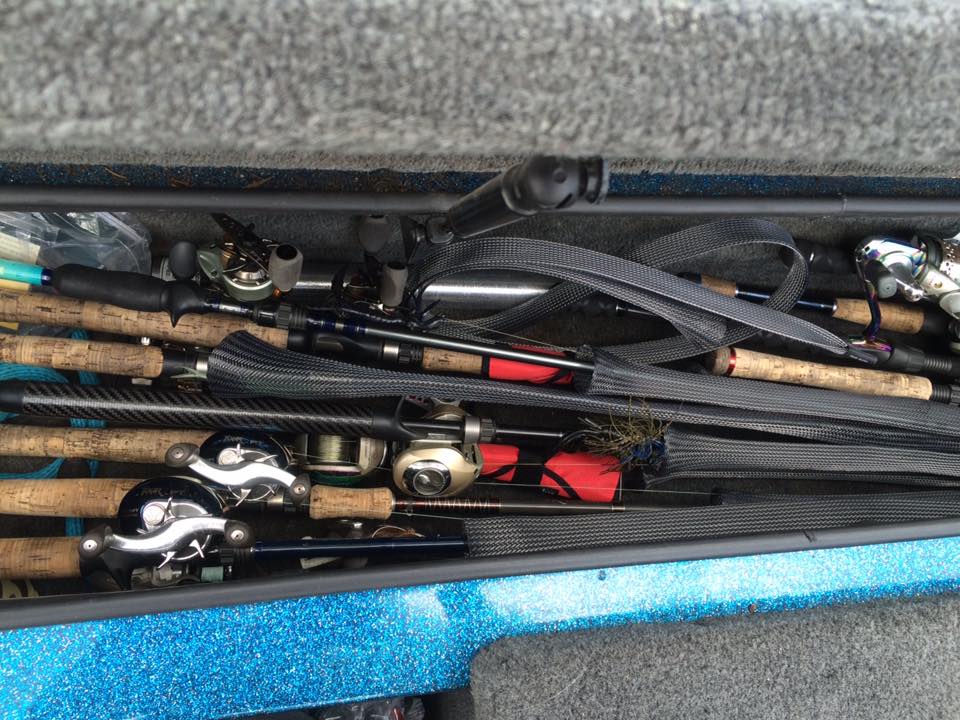
Why Does Every Fisherman Eventually Own 12 Fishing Rods?
There’s a point in every fisherman’s life when one fishing rod stops being enough.
It usually starts pretty innocently. You buy a spinning combo because you want to go fishing. For a while, that one rod does everything. You throw a jig with it, cast a spinner, toss a crankbait, maybe even use it for some light trolling. It isn't perfect for every situation, but it works.
Then you spend enough time on the water to realize that some rods really are better suited for certain types of fishing.
Maybe you start targeting walleye more seriously and pick up a longer, lighter rod for jigging. Then you get into bass fishing and discover that the rod you were using for walleye isn't exactly ideal for throwing heavier plastics. A year later, you decide to get into trolling and need something completely different.
None of those purchases seemed unreasonable at the time.
That's how you end up with a garage full of fishing rods.
The funny part is that most fishermen don't actually decide they're going to collect fishing rods. It just happens gradually. One rod turns into three, three turns into six, and eventually you're standing in your garage trying to remember why you have seventeen fishing rods when you only have two hands.
It Doesn't Take Long to Build a Collection
Fishing is one of those hobbies where experience tends to create more equipment rather than less.
The more you learn, the more you realize there are different ways to approach the same fish. A walleye angler who spends most of the summer jigging may have a completely different collection than someone who spends those same months casting for bass or pulling crankbaits.
Then there are the rods that come from specific situations. Maybe you have a heavier setup for northern pike because you don't want to risk your lighter gear. Maybe you've got a dedicated trolling rod because it makes working a spread of lines easier. There might be a rod you keep specifically for guests, another that you use for ice fishing, and an older favorite that you refuse to get rid of even though you haven't used it in years.
And that's before you factor in the rods that somehow just end up in your possession.
A friend upgrades and gives you his old setup. Your dad has a few rods he doesn't use anymore. You find a good deal on something you've been wanting to try. A rod breaks and you replace it, but keep the old one because you might eventually use the reel or repair it.
Over time, the collection becomes less about what you intended to own and more about everything you've accumulated along the way.
Then You Have to Store Them
Having a bunch of fishing rods isn't necessarily a problem. Finding a good place to keep them is.
Fishing rods are awkward to store because they're long, relatively fragile and difficult to stack. You can lean a couple against the wall without much trouble, but that solution doesn't scale particularly well.
Eventually you have a pile.
Most garages and shops seem to have one. The rods are leaning against a wall, tucked behind a workbench or squeezed into a corner next to the tackle boxes. Every time you need one, you have to move three others out of the way.
It's not the end of the world, but it's one of those little problems that becomes increasingly annoying the more gear you accumulate.
And fishing rods aren't particularly forgiving when they're stored that way. Tips can get caught on things, guides can bend, and rods can easily get knocked over when you're moving other equipment around.
The frustrating part is that you're often putting a fair amount of money into something and then storing it in the least organized way possible.
The Problem Gets Worse When Fishing Season Starts
The storage problem becomes even more obvious when you're actually getting ready to go fishing.
You might have a couple of rods already in the boat, but you want to bring a few more options. Maybe you're heading to a lake you've never fished before and don't know exactly what you'll be throwing. So you grab a few extra setups.
Now you've got rods in the truck, rods in the boat and rods leaning against the garage wall.
Then someone else shows up with their gear.
Before long, there are fishing rods everywhere.
Anyone who has spent time loading a boat knows how quickly this can happen. Rods are one of those things you need to bring with you, but they also take up a surprising amount of space. They're easy to lay down and surprisingly difficult to organize once you've got a bunch of them together.
That's usually when you start looking for a better storage solution.
You Don't Need to Get Rid of Your Fishing Rods
There are plenty of ways to reduce clutter, but selling half of your fishing gear probably isn't realistic.
Even if you haven't used a particular rod in a couple of years, there's a good chance you'll eventually convince yourself that you need it.
That's because fishing gear tends to have a purpose, even if that purpose only comes around a few times a year.
The better answer is simply giving your rods a place to live.
Keeping them organized means you can see what you have, grab the setup you need without digging through a pile, and keep everything off the floor and out of the way.
It also makes getting ready to fish a lot less frustrating. Instead of sorting through a pile of rods every time you're heading out, you can look at your setups and grab exactly what you want.
That's really where a dedicated rod storage system makes sense.
A Place for Every Rod
The idea behind the Rod Rig is pretty simple. Instead of treating your fishing rods like another piece of gear that needs to be shoved into an open corner, give them a dedicated place to hang.
The Rod Rig keeps your rods organized and accessible while making better use of the wall space you already have.
That matters whether you've got a handful of rods or enough gear to make your garage look like a small tackle shop.
It's also a better way to protect the investment you've already made. Fishing rods aren't indestructible, and most of the damage they experience doesn't happen while you're actually fishing. It's the rod that gets knocked over in the garage, the tip that catches on something while you're moving equipment, or the guide that gets bent when several rods are tangled together.
Keeping them separated and organized eliminates a lot of those problems.
More importantly, it makes your fishing gear easier to use.
Because There Will Probably Be Another One
The truth is, none of this is going to stop fishermen from buying more rods.
It probably shouldn't.
Part of what makes fishing fun is trying different techniques and finding equipment that makes those techniques more enjoyable. There is something satisfying about having the right setup ready to go when you need it.
The problem isn't having a lot of fishing rods. The problem is when all of those rods become one giant pile that you have to fight with every time you need something.
Most fishermen will probably continue adding to their collection. There will always be a new technique to try, another species to chase, or another rod that seems too good of a deal to pass up.
Eventually, you'll look around and realize you've accumulated another three or four setups.
At that point, the question isn't really whether you own too many fishing rods. That's a decision every fisherman has already made for himself.
The real question is where you're going to put them.
A dedicated rod storage system gives you a simple answer. Keep your rods organized, keep them protected, and keep them ready for the next time you hit the water.
Because if there's one thing you can count on as a fisherman, it's that you probably aren't done buying fishing rods yet.
Share:
Fall Fishing Is Heating Up: What Anglers Across The U.S. Should Be Watching