

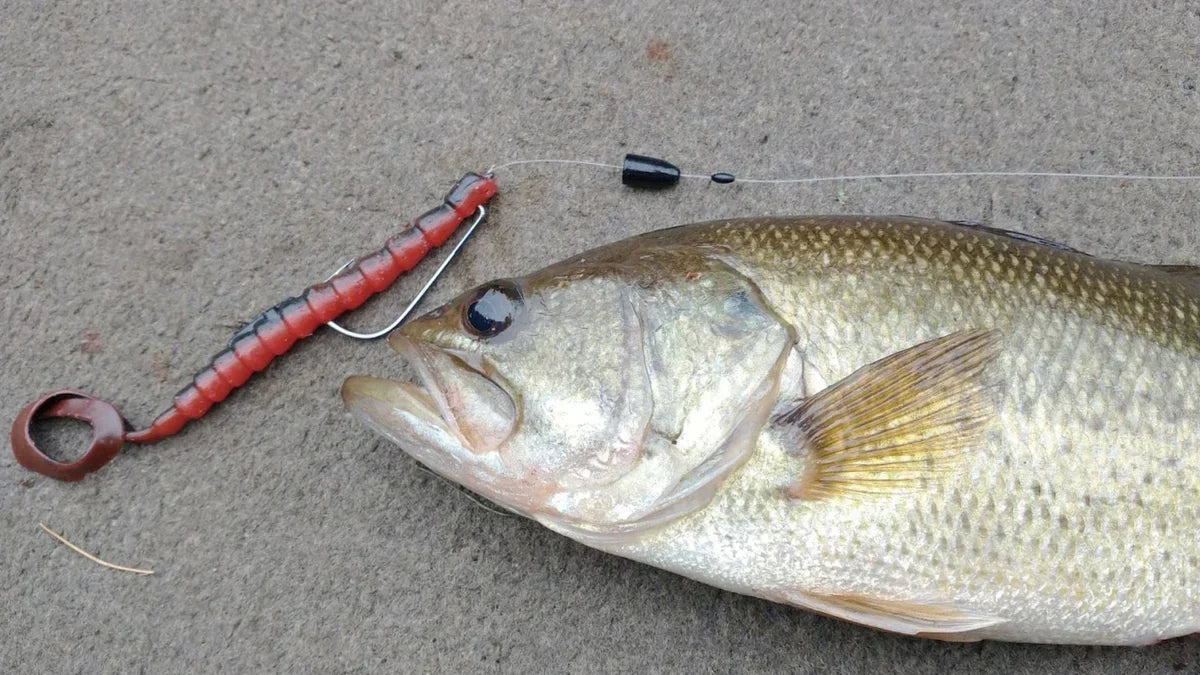
Why I Think the Texas Rig Is the Best Bass Fishing Lure Ever Made
If someone asked me to name the best bass fishing lure of all time, I'd probably give them an answer they weren't expecting.
I'd say the Texas rig.
I know, I know - technically it isn't a lure. It's a way of rigging a soft plastic bait. But when people ask that question, they're usually trying to figure out what they should tie on when they want to catch fish. If I had to choose just one setup to fish for the rest of my life, it would be a Texas-rigged soft plastic without a second thought.
Over the years I've caught bass on just about everything. Spinnerbaits, chatterbaits, frogs, crankbaits, jigs, swimbaits, topwater - they've all had their moments. There are days when another lure will absolutely outfish a Texas rig. But I've never found another presentation that works so consistently, in so many different situations, throughout the entire year.
I think that's why it's stood the test of time.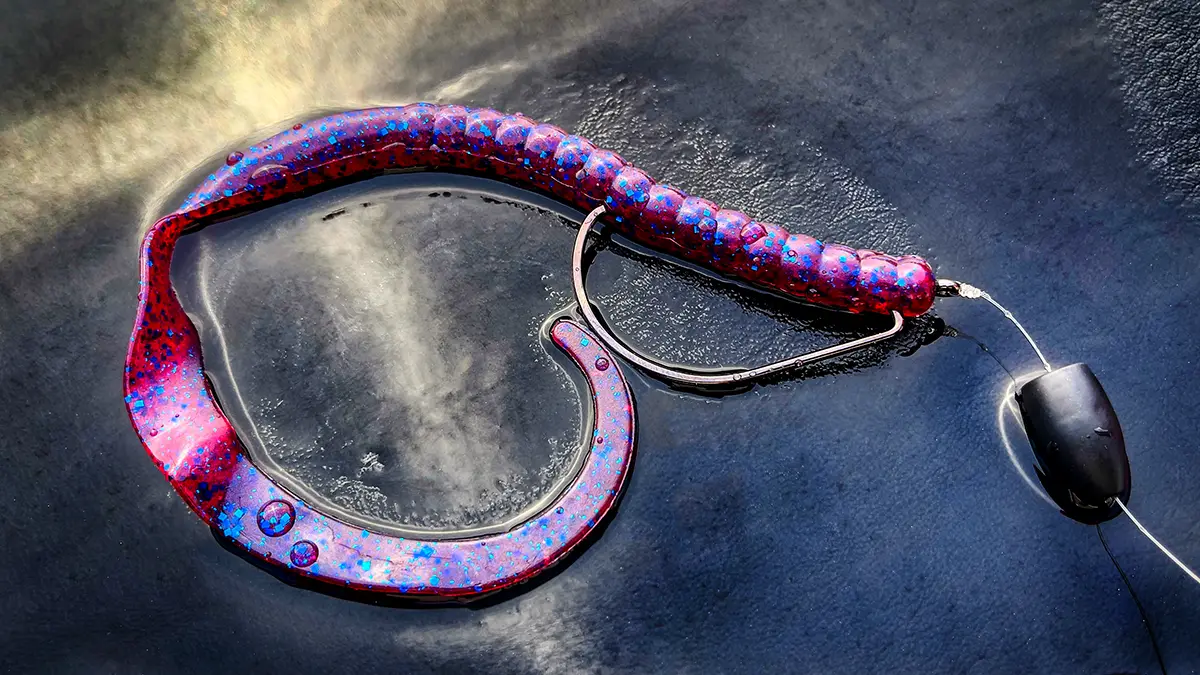
One of the biggest advantages of a Texas rig is how many places you can fish it. Bass love hiding in places that make most anglers nervous. Thick grass, brush piles, laydowns, dock pilings, flooded bushes - those are the places where big fish spend their day, and they're also the places where many lures get hung up after a cast or two.
A Texas rig changes that. Because the hook point is tucked into the bait, you can fish confidently around heavy cover without constantly worrying about snagging. Instead of avoiding the best-looking spots on the lake, you can put your bait exactly where the fish are most likely to be.
It's also one of the few techniques that never really goes out of season.
In the spring, I'll throw it around spawning areas and shallow cover. During the heat of summer, it slips into thick vegetation where bass go to escape the sun. When fall rolls around, it's just as effective around wood, rock, and baitfish. Even in the middle of winter, when bass don't want to chase fast-moving lures, a slowly worked Texas rig can still get bites.
That's something I love about it. I never have to wonder if it's the "right" bait for the time of year. I simply adjust the weight, the soft plastic, or the retrieve to match the conditions.
That flexibility is another reason I keep coming back to it.
Some days bass want a ribbon-tail worm. Other days they'll only touch a creature bait or a craw. Sometimes a weightless stick worm is all they'll eat. The nice thing is that I don't have to learn a completely different technique every time I change baits. I can stick with the same presentation and simply change the profile or action until I figure out what the fish are looking for.
That's one of the reasons the Texas rig is so popular with both beginners and tournament anglers. It's easy enough for someone just getting into bass fishing, yet versatile enough that some of the best fishermen in the world still rely on it every single week.
The longer I've fished a Texas rig, the more I've come to appreciate how connected it makes me feel to what's happening underwater. You begin to notice little things that are easy to overlook with faster-moving lures. You can tell when your bait is working through grass instead of crawling across rock. You learn what it feels like when it slides over a branch, and eventually you start recognizing those subtle bites that barely move the line. It's one of those techniques where experience really pays off, and every trip to the lake teaches you something new.
Another thing that's hard to ignore is how many big bass have been caught on a Texas rig over the years.
There's a reason so many anglers reach for one when they're targeting quality fish. Bigger bass often spend their time buried in heavy cover where they don't have to compete for food, and a Texas-rigged soft plastic is one of the best ways to put a bait in front of them without spooking them or getting hung up. It's a quiet, natural presentation that simply catches fish.
Maybe that's why it's become my confidence bait.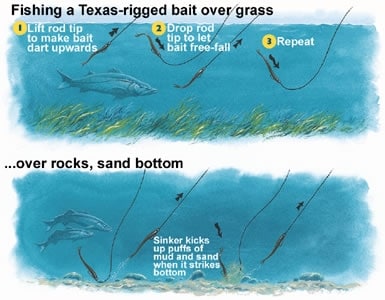
Whenever the fishing gets tough or I'm trying to figure out a new lake, I almost always start with a Texas rig. It slows me down just enough to fish the water thoroughly, and I know that if a bass is tucked into a piece of cover, I've got a good chance of putting my bait in front of it.
Of course, having confidence in a lure doesn't help much if your gear is a tangled mess before you even make your first cast.
Like a lot of bass anglers, I usually keep multiple rods rigged with different Texas-rigged baits so I can quickly switch between a worm, a creature bait, or a craw depending on what the fish are telling me. The last thing I want to do is spend the first fifteen minutes at the ramp untangling rods or replacing broken baits that got smashed together during the drive.
That's one of the reasons I appreciate The Rod Rig. It keeps every rod secure and organized whether I'm heading to a local pond after work or towing my boat across the state. Instead of dealing with tangled rods, I can grab the setup I want and start fishing.
At the end of the day, that's really what the Texas rig is all about.
It isn't flashy.
It isn't the newest trend.
It probably won't be the lure everyone is talking about after the next big tournament.
But year after year, season after season, it continues to catch bass in just about every body of water where they swim.
If someone handed me one rod, a handful of bullet weights, a pack of hooks, and a bag of soft plastics, I'd head to the lake with complete confidence.
Because after all these years, I still think the Texas rig is the best bass fishing lure ever made.
Share:
Win a Rod Rig and Take the Chaos Out of Your Fishing Setup