

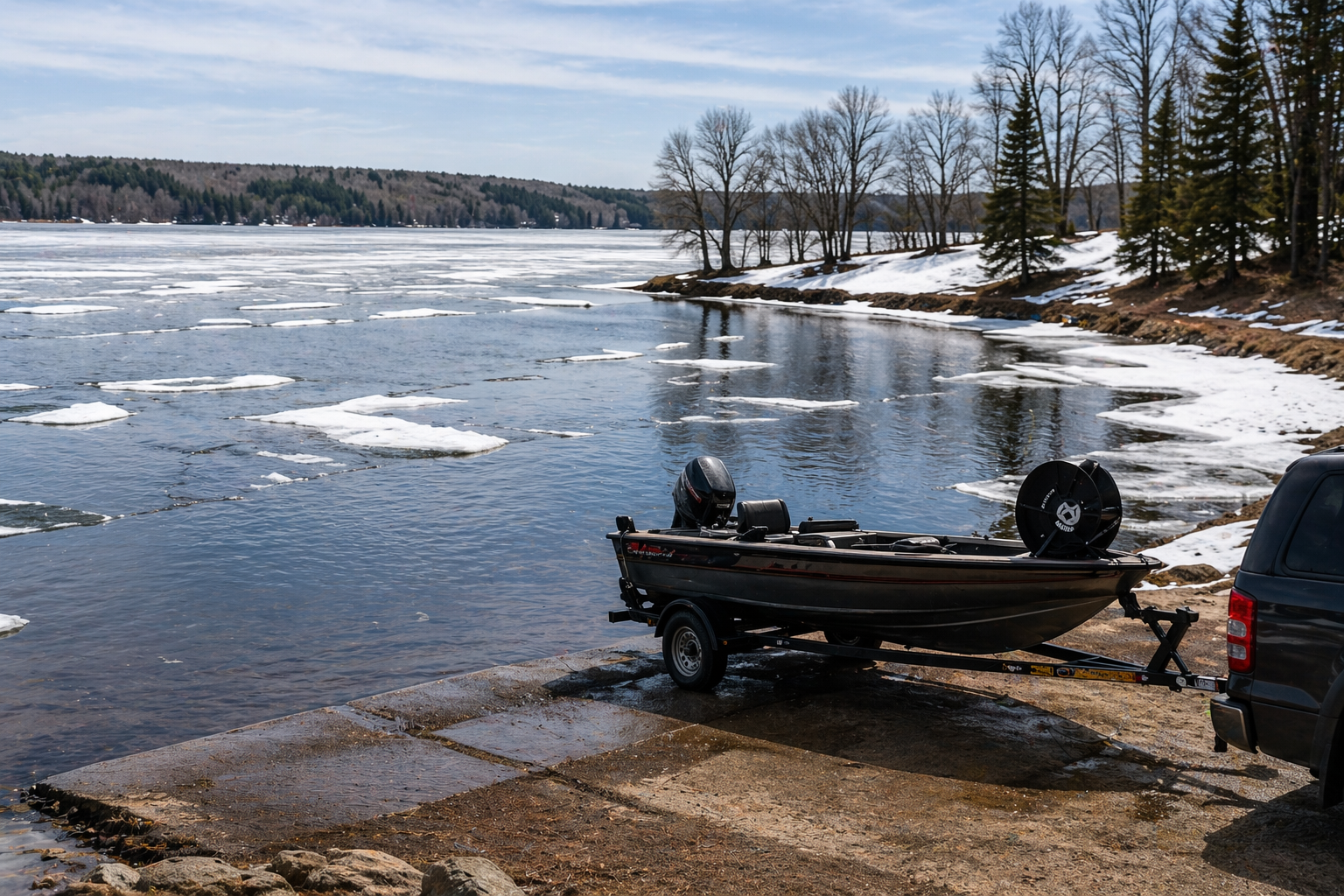
In my neck of the woods, were just now seeing ice out on the big lake.
Spring always feels like a reset button if you’re an angler. The lakes finally start to open up, the snow melts back into the shoreline, and for a brief window it feels like everything is waking up at once. Early ice-out fishing has this almost electric energy to it. You know the fish are there, you know they’re about to turn on, and you also know that if you hit it right, you can have some of the best days of the entire year.
But that window can be deceptive. A lot of people hit the water with fall habits or mid-summer expectations, and early spring just doesn’t play by those rules. It’s one of the easiest times of year to get completely skunked while doing everything you think should work.
One of the biggest mistakes starts before you even make a cast. People assume that because the ice is gone, the fish are active. In reality, the water is still brutally cold. Fish are moving, but they are doing it slowly and with purpose. That aggressive summer mindset where you cover water fast and force reaction bites will burn you more often than not. Early spring rewards patience in a way most anglers struggle with. Slowing down is not just a suggestion, it is the entire game.
That ties directly into presentation, which is where a lot of early-season frustration comes from. It is easy to pick up confidence baits and fish them the way you always do. The problem is that fish in cold water do not want to chase something ripping past their face. Even when they are feeding, they tend to commit to easy meals. If your bait looks like it is trying to escape at full speed, you are asking a sluggish fish to do something it simply does not want to do. Subtle movements, longer pauses, and letting a bait sit in the strike zone longer can make all the difference. It can feel painfully slow at times, but that is usually when it starts working.
Location is another piece that trips people up, especially if they are coming off ice fishing patterns. Just because fish were stacked in a certain basin a few weeks ago does not mean they are still there. As soon as the ice leaves, everything begins to shift. Sunlight penetrates the water column again, shallow areas start to warm first, and baitfish begin moving. Fish follow that progression, but not all at once. A common mistake is committing too early to shallow water or staying too long in wintering areas. Early ice-out fishing is a transition, and the best anglers treat it like one. They move with the conditions instead of locking into a single depth or structure.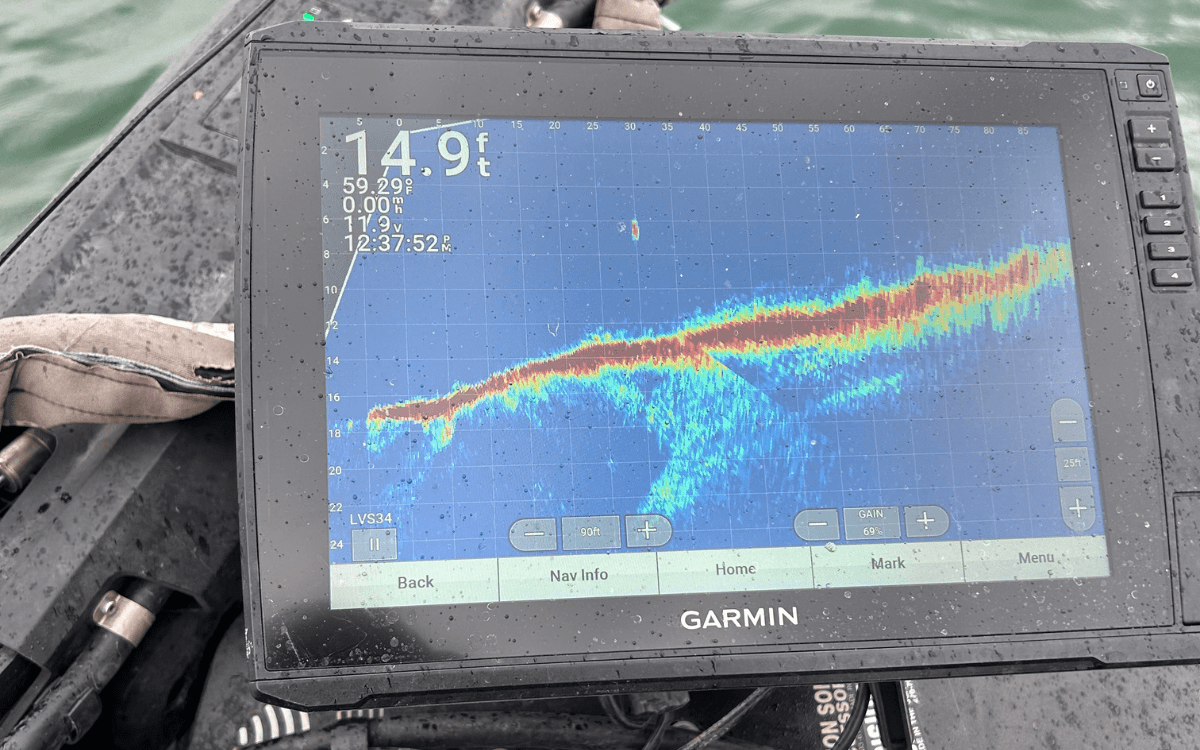
Another overlooked factor is how much small temperature changes matter. In the middle of summer, a degree or two might not mean much. In early spring, it can be everything. A shallow bay that gets a few extra hours of sun can hold noticeably warmer water, and that is often enough to draw in bait and fish. Wind can push slightly warmer surface water into certain shorelines, creating temporary feeding zones that did not exist the day before. People often fish spots because they look good on a map or because they have history there, but during ice-out, the fish are following temperature more than anything else. If you are not paying attention to that, you are guessing.
Gear choices can quietly hurt you too. Early season fish are not typically smashing baits with the same aggression you see later in the year. Lighter lines, more natural presentations, and a setup that lets you detect subtle bites can make a huge difference. A lot of missed fish in the spring are not from bad luck, they are from not even realizing you had a bite in the first place. When the water is cold, everything feels muted, including the strike.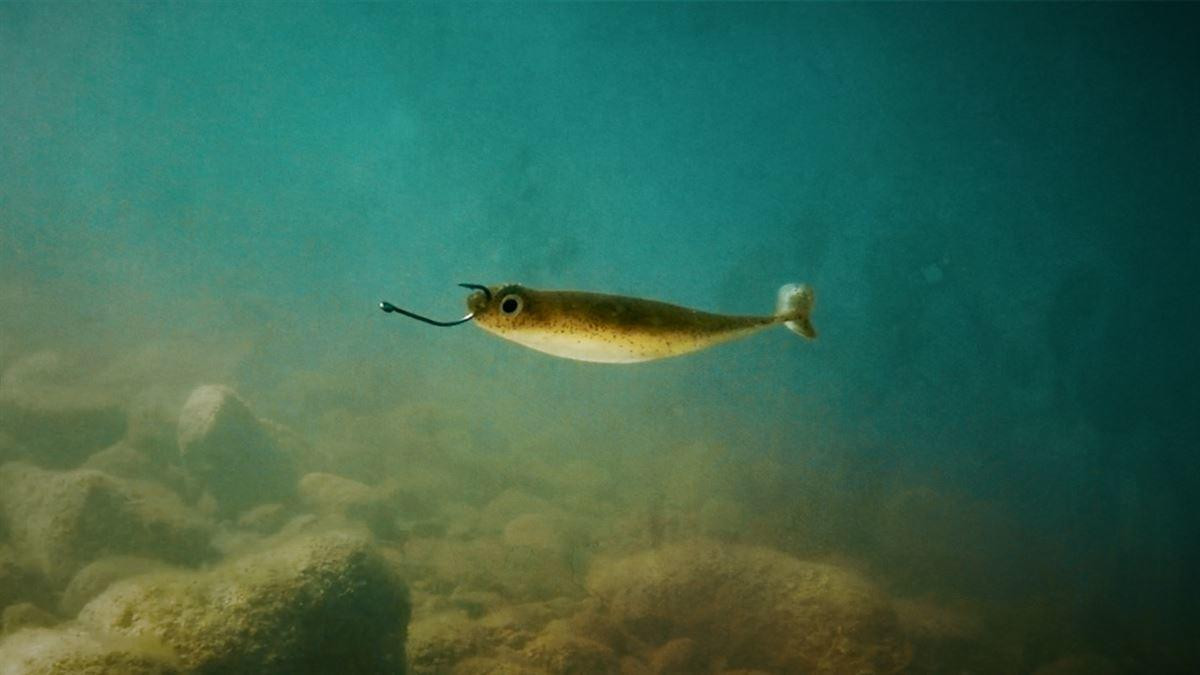
Then there is timing, which might be the most misunderstood part of early ice-out fishing. People tend to focus on the middle of the day because that is when it feels the warmest, but that is not always when the best bite happens. Sometimes the afternoon sun does trigger activity, but there are plenty of days where a short window opens up and closes just as fast. It might be late afternoon, it might be right before sunset, or it might be tied to a slight weather change. The mistake is assuming the fish will be active all day just because conditions seem good. Early spring fish often feed in short bursts, and if you are not on the water when it happens, it can feel like nothing is working.
There is also a mental side to it that does not get talked about enough. After a long winter, everyone is eager to get back out and catch fish. That urgency can push you into fishing too fast, changing baits too often, or abandoning areas before they have had a real chance to produce. Early ice-out fishing rewards confidence and discipline more than constant adjustment. Sometimes the right move is to stay put, slow down even more, and trust that you are around fish.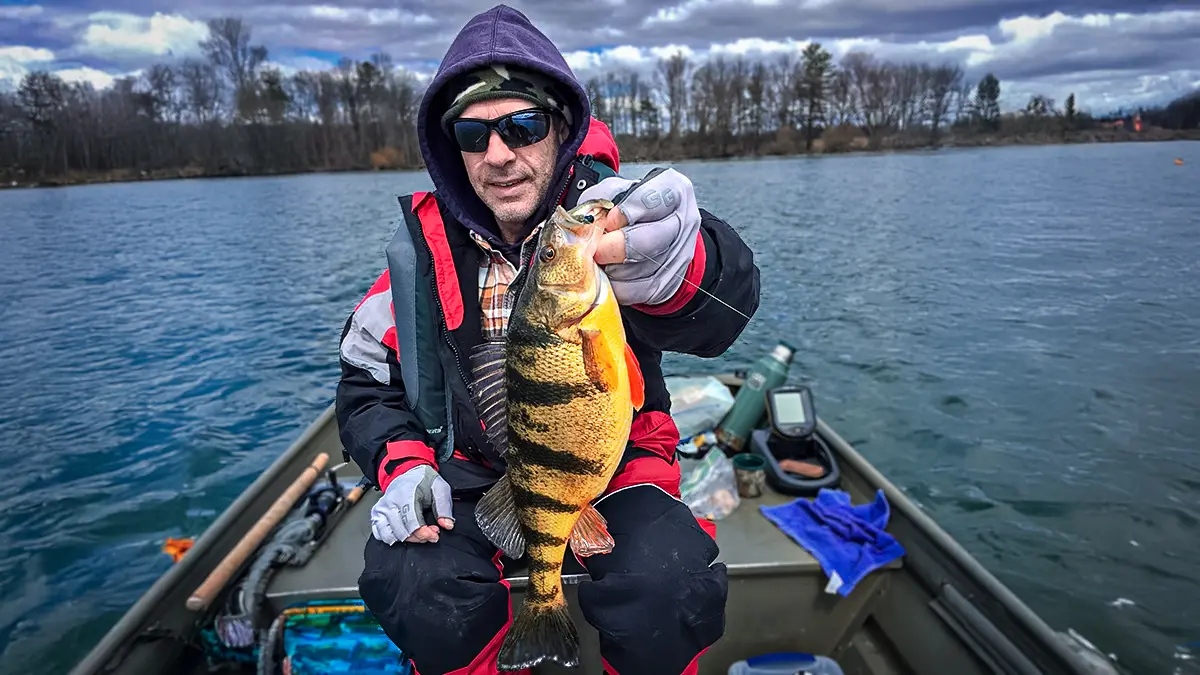
What makes this time of year so interesting is that it sits right on the edge of a major seasonal shift. The fish are not in full winter mode anymore, but they are not fully committed to spring patterns either. If you treat it like either extreme, you will struggle. The anglers who do well are the ones who embrace that in-between stage. They pay attention to subtle changes, they adjust their pace, and they let the conditions dictate their approach instead of forcing one.
When it all comes together, early ice-out fishing can feel almost unfair. The fish have not seen much pressure yet, they are grouped up, and when you crack the code, you can have some of the most memorable days of the year. But getting there requires unlearning a few habits and respecting just how different this window really is.
Share:
How to Dive Into Your First Fishing Tournament Without Freaking Out
Spinning, Baitcasting, Conventional - Choosing the Right Reel for How You Fish