


Between rods, tackle boxes, landing nets, waders, and coolers, it doesn’t take many fishing trips for a vehicle to turn into rolling chaos.
Gear slides around, rods get stepped on, and somehow the lure you need most always ends up buried at the bottom. Staying organized isn’t just about keeping things tidy - it protects expensive equipment, saves time on the water, and keeps you ready to fish whenever an opportunity pops up. Whether you’re chasing early morning bites or squeezing in a last-minute sunset cast, these are our go-to fishing gear organization tips for anglers who live out of their vehicles.
1. Start with the Rods
Fishing rods dictate everything else. They’re long, awkward to store, and often the most fragile pieces of gear you own. That’s why rod storage should be the foundation of your setup. Interior-mounted systems like The Rod Rig™ keep rods elevated, secure, and completely out of the way. By moving rods up and overhead, you immediately free up floor space and cargo room for tackle boxes, coolers, and packs - while also protecting guides, tips, and reels from accidental damage. Build your organization around the rods, not the other way around.
2. Lean Into Modular Storage
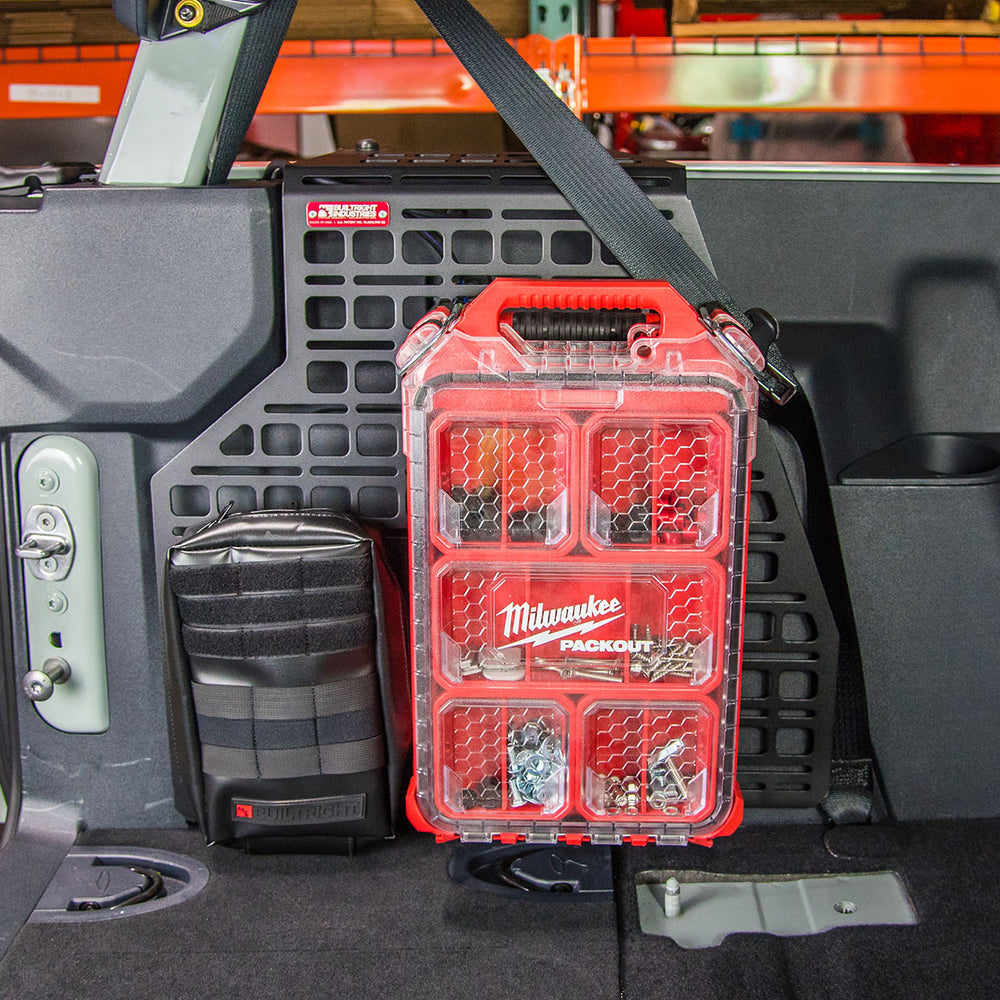
Once rods are handled, modular storage becomes your best friend. Stackable bins, soft-sided organizers, and MOLLE-style panels make it easy to separate tackle, tools, first-aid gear, and spare parts without committing to a single rigid layout. Systems like BuiltRight Industries MOLLE panels let you customize storage based on how you fish, not how a generic organizer thinks you should. Labeling bins might feel excessive at first, but when you’re tired, cold, or in a rush, it pays off fast. Future you will absolutely appreciate it.
3. Keep High-Use Gear Within Arm’s Reach
Not all gear deserves equal access. Items you use every trip - pliers, line cutters, Dr.Slicks, frequently used lures, leader material - should live near the hatch or tailgate, not buried under camp chairs and spare boots. The easier it is to grab essentials, the less time you spend digging and the more time you spend fishing. A simple rule helps here: if you touch it every trip, it shouldn’t require unloading half the vehicle to reach it.
4. Protect Gear From Heat and Moisture
Vehicles get hot, and fishing gear does not appreciate it. Electronics, reels, and soft plastics are especially vulnerable to prolonged heat and moisture. A small dry bag or insulated tote can go a long way toward extending the life of your gear, especially if your truck or SUV spends time parked in direct sun. Even basic protection helps prevent warped baits, corroded components, and that dreaded melted-plastic mess at the bottom of a bin.
5. Reset After Every Trip
The most overlooked organization tip is also the simplest. Take ten minutes when you get home to reset. Rinse saltwater gear, empty and dry coolers, toss trash, and restock anything you used. This quick habit keeps clutter from building and prevents gear from slowly disappearing into the abyss of your cargo area. Consistency here is the secret to always knowing where everything is when it’s time to roll out again.

Got it?
Organization builds confidence. When every piece of gear has a purpose and a place - especially your rods - you spend less time fumbling and more time focused on fishing. You protect your investment, fish more efficiently, and stay ready for whatever the day brings.
Share:
Installing The Rod Rig™: Step-by-Step Guide
Have We Gone Too Far? Technology, Fishing, and Whether We’ve Lost the Plot